News
Which Type 2 Portable EV Charger Meets Your Everyday Charging Needs?
A Type 2 Portable EV Charger offers electric vehicle owners a flexible way to recharge their vehicles without relying exclusively on a permanently installed charging station. However, choosing the right charger involves more than checking whether its connector fits the vehicle. Charging power, electrical compatibility, safety protection, cable quality, portability, and environmental resistance all influence the charging experience.
This guide explains the essential features of a Type 2 portable EV charger, how to evaluate its technical specifications, what to consider before purchasing, and how businesses can identify a reliable manufacturing partner. Whether you are an EV owner, distributor, importer, or charging equipment wholesaler, understanding these details can help you make a more informed decision.
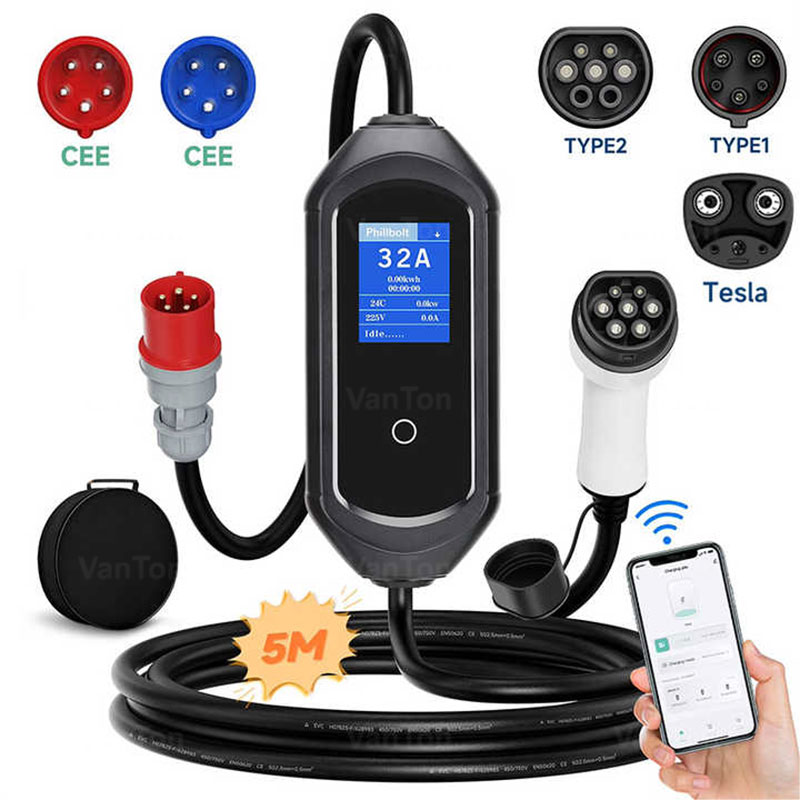
Table of Contents
- Understanding a Type 2 Portable EV Charger
- Which Features Matter Most?
- Understanding Charging Power and Performance
- Essential Safety Protection Technologies
- Type 2 Portable Charger vs. Fixed Wallbox
- How to Choose the Right Charger for Your Needs
- Common Charging Problems and Practical Solutions
- Installation, Usage, and Maintenance Tips
- What Should Buyers Look for in a Manufacturer?
- Why Consider Ningbo Vanton EV Charger Co., Ltd.?
- Frequently Asked Questions
- Final Thoughts
1. Understanding a Type 2 Portable EV Charger
As electric vehicle ownership continues to expand, convenient charging solutions have become increasingly important. Drivers need equipment that fits their daily routines, while businesses need charging products that are compatible with different markets and vehicle requirements. A Type 2 Portable EV Charger addresses these needs by combining a vehicle-side Type 2 connector with a portable charging cable and an integrated control unit.
The Type 2 connector, commonly associated with European AC charging systems, follows the IEC 62196 connector family. It is designed to provide a standardized connection between compatible electric vehicles and AC charging equipment.
A typical portable charger consists of three main components:
- Power supply plug: Connects the charger to a suitable electrical outlet or power source.
- In-cable control and protection device: Monitors the charging process and provides essential control and protection functions.
- Type 2 vehicle connector: Connects to the vehicle's charging inlet to deliver AC electricity.
Important distinction: Type 2 and Mode 2 are not the same thing.
Type 2 describes the vehicle connector configuration, while Mode 2 describes a charging arrangement using a standard AC supply with an in-cable control and protection device. A Type 2 portable charger is commonly designed as a Mode 2 charging solution, although product configurations can vary.
For users who travel frequently, rent accommodation, or need a backup charging solution, portability can make a significant difference. Instead of depending entirely on public charging stations, drivers can carry a compatible charger and use an appropriate power outlet when available.
2. Which Features Matter Most in a Type 2 Portable EV Charger?
Not every portable charger provides the same level of convenience, performance, or protection. Before selecting a product, buyers should examine its technical features rather than focusing only on appearance or advertised maximum power.
Adjustable Charging Current
Adjustable current is a valuable feature because different electrical outlets and circuits have different load capacities. Depending on the charger model, users may be able to select charging current settings such as 6A, 8A, 10A, 13A, or 16A.
This flexibility helps users match the charging current to the available electrical supply. However, selecting a lower current does not automatically make an unsuitable or damaged socket safe. The outlet, wiring, protective devices, and electrical installation must all be suitable for EV charging.
Clear Charging Status Display
A built-in display or LED indicator helps users understand what is happening during charging. Depending on the product design, it may show:
- Current charging status.
- Selected charging current.
- Operating voltage or charging power.
- Charging duration or scheduled start time.
- Error warnings and protection alerts.
Practical Cable Length
A cable that is too short can make parking and charging inconvenient, while an unnecessarily long cable may be difficult to organize and transport. Buyers should measure the distance between the electrical outlet and the vehicle's charging inlet before selecting a suitable cable length.
Durable Materials and Construction
Portable charging equipment is frequently moved, coiled, stored, and exposed to different environmental conditions. A durable housing, flexible cable jacket, well-designed strain relief, and robust connector construction can improve long-term usability.
Environmental Protection Rating
The IP rating indicates the degree of protection provided against the ingress of solid objects and water under specified test conditions. Different charger components may have different ratings, so buyers should check the rating of the control box, vehicle connector, and power plug separately.
Buyer tip: A portable charger should be evaluated as a complete charging system. A high IP rating on the control box does not necessarily mean every connector and plug can withstand the same exposure conditions.
3. Understanding Charging Power and Performance
Charging power is one of the most important specifications when choosing a Type 2 Portable EV Charger. It determines how quickly electrical energy can be supplied to the vehicle, although actual charging speed also depends on the vehicle's onboard charger, battery condition, electrical supply, and temperature.
Single-Phase Charging
Many portable Type 2 chargers are designed for single-phase AC supplies. For example, a 230V supply operating at 16A provides approximately 3.68kW of charging power.
The basic calculation is:
Charging Power = Voltage × Current
230V × 16A = 3,680W, or approximately 3.68kW.
At a lower current setting, charging power decreases accordingly. For example, a 230V supply operating at 10A provides approximately 2.3kW.
Three-Phase Charging
Some portable charging products support three-phase electrical supplies. Under suitable conditions, a three-phase charger operating at 400V and 16A per phase can deliver approximately 11kW.
However, not all portable chargers support three-phase operation. Buyers must confirm the input plug, electrical supply, charger configuration, and vehicle charging capability before purchasing.
| Charging Configuration | Approximate Power | Typical Consideration |
|---|---|---|
| 230V / 8A | 1.84kW | Lower-current single-phase charging |
| 230V / 10A | 2.30kW | Moderate single-phase charging |
| 230V / 13A | 2.99kW | Higher-current single-phase charging |
| 230V / 16A | 3.68kW | Common single-phase configuration |
| 400V / 16A, three-phase | 11.0kW | Requires compatible three-phase equipment and supply |
These figures are theoretical electrical power calculations, not guaranteed vehicle charging rates. Conversion losses and vehicle-side charging limitations may reduce the actual power received by the battery.
Why Does the Vehicle Also Matter?
A charger cannot force an electric vehicle to accept more power than its onboard AC charger supports. For example, if a vehicle has a maximum AC charging capacity of 7.4kW, connecting it to a compatible 11kW AC charger will not make it charge at 11kW.
For this reason, checking the vehicle's charging specifications is just as important as checking the charger's rated output.
4. Essential Safety Protection Technologies
Electrical safety should never be treated as an optional feature. A portable EV charger operates under sustained electrical loads, making reliable protection functions and proper electrical installation essential.
Residual Current Protection
Residual current protection helps detect leakage current and disconnect the supply when specified conditions are exceeded. Depending on the product design, the protection system may include AC and DC residual current detection.
For Mode 2 charging equipment, IEC 62752 specifies requirements for in-cable control and protection devices, including relevant control and safety functions.
Overcurrent Protection
Overcurrent protection helps prevent excessive current from damaging charging equipment and associated electrical components. The device should operate within its designed current limits and coordinate appropriately with the electrical installation.
Overvoltage and Undervoltage Protection
Unstable supply voltage can affect charging performance and equipment reliability. Voltage monitoring and protective shutdown functions help the charger respond to abnormal electrical conditions.
Overtemperature Protection
Heat can develop at electrical contacts, plugs, cable connections, and inside the control unit. Temperature monitoring can help reduce charging current or stop charging when abnormal temperatures are detected, depending on the product design.
Grounding Protection
Proper grounding is a fundamental part of electrical safety. A charger designed with grounding detection can identify certain grounding-related problems and prevent charging from proceeding when required conditions are not met.
| Protection Function | Main Purpose |
|---|---|
| Residual current protection | Detects specified leakage current conditions |
| Overcurrent protection | Helps prevent excessive current |
| Overvoltage protection | Responds to excessively high supply voltage |
| Undervoltage protection | Responds to excessively low supply voltage |
| Overtemperature protection | Helps control excessive operating temperature |
| Grounding protection | Checks specified grounding conditions |
| Short-circuit protection | Helps protect against short-circuit faults |
Safety reminder: Never assume that a charger with multiple built-in protection functions can compensate for unsafe household wiring. Have the electrical supply and socket assessed by a qualified electrician. Avoid extension cords, cable reels, damaged outlets, and unsuitable adapters unless the equipment manufacturer and applicable local regulations explicitly permit the arrangement.
5. Type 2 Portable Charger vs. Fixed Wallbox
Portable chargers and fixed wallboxes both provide AC charging, but they serve different usage requirements. Understanding their differences helps users select equipment that fits their daily charging habits.
| Comparison | Portable Type 2 Charger | Fixed Wallbox |
|---|---|---|
| Installation | Usually uses a compatible existing power outlet | Requires fixed installation |
| Portability | Easy to carry and store | Generally stationary |
| Charging power | Varies by plug and electrical supply | Can support higher power configurations |
| Typical use | Travel, backup, and flexible charging | Regular home or workplace charging |
| Installation cost | May avoid dedicated wallbox installation | May involve installation and electrical upgrades |
| Convenience | Requires access to a suitable outlet | Dedicated charging location |
A portable charger is especially useful when flexibility is important. A fixed wallbox may be more suitable for drivers who charge regularly at the same location and require a dedicated charging setup.
These products are not necessarily competitors. Many EV owners use a wallbox as their primary charging solution while keeping a portable charger in the vehicle for occasional use.
6. How to Choose the Right Charger for Your Needs
Choosing the right Type 2 Portable EV Charger begins with identifying the actual charging environment. The best product is not necessarily the one with the highest rated power. It is the one that matches the vehicle, power supply, operating conditions, and user's expectations.
1
Confirm vehicle connector compatibility.
Check whether the vehicle has a Type 2 AC charging inlet. Also verify the vehicle's supported AC charging power and phase configuration.
2
Check the available electrical supply.
Identify the outlet type, rated voltage, current capacity, grounding arrangement, and local electrical requirements. Do not select a charger based only on the highest advertised current.
3
Choose an appropriate charging power.
Compare the charger's rated output with the vehicle's onboard charger and the electrical installation. A suitable lower-power option may be more practical than an incompatible high-power model.
4
Evaluate safety features and compliance.
Review residual current protection, overcurrent protection, temperature monitoring, grounding protection, and the applicable product standards and certifications for the destination market.
5
Consider cable length and portability.
Choose a practical cable length and manageable product weight. Storage bags, cable organizers, and protective caps can also improve convenience.
6
Compare product support and warranty.
Check warranty conditions, technical documentation, replacement parts availability, and the manufacturer's ability to provide after-sales support.
7. Common Charging Problems and Practical Solutions
Even a well-designed charger may encounter problems when the electrical supply, connectors, or operating environment are unsuitable. Recognizing common symptoms can help users identify the next appropriate action.
Problem 1: The Charger Does Not Start
Possible causes: An unsuitable power outlet, missing grounding, incorrect connection sequence, vehicle charging restrictions, or an active protection alert.
What to do: Check the power supply and connector connections. Review the charger's indicator or error message and consult the user manual. If grounding or electrical supply problems are suspected, stop using the outlet and contact a qualified electrician.
Problem 2: Charging Speed Is Slower Than Expected
Possible causes: A lower current setting, limited vehicle onboard charger capacity, household power restrictions, battery temperature management, or a shared electrical load.
What to do: Compare the selected current and measured charging conditions with the vehicle and charger specifications. Never increase the current beyond the rating of the electrical installation.
Problem 3: The Charger Stops Unexpectedly
Possible causes: Overtemperature protection, unstable supply voltage, leakage detection, or another electrical fault.
What to do: Stop charging and inspect the charger for visible damage or unusual heat. Allow the equipment to cool if appropriate, and follow the manufacturer's troubleshooting instructions. Repeated shutdowns require professional inspection rather than repeated resets.
Problem 4: The Plug or Socket Becomes Excessively Hot
Possible causes: Loose contacts, damaged socket components, poor electrical connections, or sustained loading beyond the outlet's capability.
What to do: Stop charging immediately if the plug or socket becomes unusually hot, discolored, or emits an unusual smell. Do not continue using the outlet until it has been inspected by a qualified electrician.
8. Installation, Usage, and Maintenance Tips
Although portable chargers are designed for convenient operation, correct usage remains essential for performance and safety.
Before Charging
- Read the product manual and confirm that the charger is designed for the local power supply.
- Inspect the cable, plug, control box, and vehicle connector for damage.
- Use a properly installed and appropriately rated electrical outlet.
- Keep the cable away from sharp edges, vehicle wheels, and areas where it may be crushed.
- Confirm that the selected current does not exceed the permitted electrical load.
During Charging
- Monitor the charging status and respond to warning indicators.
- Keep connectors clean and ensure that they are fully inserted.
- Avoid pulling or bending the cable sharply.
- Keep the equipment away from standing water and conditions outside its rated operating environment.
- Do not cover the control box or interfere with its normal heat dissipation.
After Charging
- Stop charging according to the vehicle and charger instructions.
- Disconnect the vehicle connector using its release mechanism rather than pulling the cable.
- Remove the power plug safely and avoid pulling on the cord.
- Coil the cable loosely and store the equipment in a dry, clean location.
- Inspect the equipment periodically for wear, cracks, or damaged contacts.
Regular maintenance does not require complicated procedures. Consistent visual inspection, careful storage, and following the manufacturer's operating instructions can help maintain reliable performance.
9. What Should Buyers Look for in a Type 2 Portable EV Charger Manufacturer?
For distributors, wholesalers, importers, and EV charging solution providers, choosing the right supplier is just as important as choosing the right product. A manufacturer's engineering capabilities, production consistency, documentation, and customization services can directly influence business performance.
Technical and Product Development Capabilities
A qualified supplier should understand charging standards, connector requirements, electrical protection functions, and different regional power configurations. Buyers should ask for detailed specifications and technical documents rather than relying solely on product descriptions.
Quality Control and Product Testing
Consistent quality is essential for products used in demanding electrical applications. Buyers should understand how the manufacturer manages incoming component inspection, assembly quality, electrical testing, functional verification, and final product inspection.
Market-Specific Configurations
Different markets use different power plugs, electrical systems, and regulatory requirements. A charger intended for one country may not be suitable for another without the correct configuration.
Before placing an order, confirm:
- Vehicle connector type and cable configuration.
- Power supply plug and regional compatibility.
- Rated voltage, current, and charging power.
- Applicable safety standards and market certifications.
- Packaging, labels, manuals, and language requirements.
OEM and ODM Customization
For businesses building their own EV charging product lines, OEM and ODM services can provide greater flexibility. Depending on the manufacturer's capabilities, customization may include branding, housing appearance, cable length, product packaging, user interface, and selected technical configurations.
Order Flexibility and Long-Term Cooperation
Reliable communication, realistic lead times, transparent quotation details, and responsive technical support are important when developing a long-term supply relationship. Buyers should also clarify sample availability, minimum order quantities, warranty policies, and spare parts arrangements before confirming an order.
Procurement recommendation: Request a complete technical specification sheet, relevant test reports, applicable certificates, and sample evaluation before moving into large-volume purchasing. Verify that the documents apply to the exact model and configuration being ordered.
10. Why Consider Ningbo Vanton EV Charger Co., Ltd.?
Choosing an EV charging equipment supplier requires a clear understanding of product requirements, market positioning, and long-term supply expectations. For businesses exploring portable EV charging products, Ningbo Vanton EV Charger Co., Ltd. is a company to contact when discussing Type 2 portable EV charger sourcing and product requirements.
When evaluating a potential cooperation project, buyers can discuss the following areas with the supplier:
- Product specifications: Discuss the required Type 2 connector, rated power, current settings, cable length, and power supply configuration.
- Market requirements: Clarify the destination country's electrical standards, plug types, labeling, and applicable certification requirements.
- Product customization: Discuss branding, packaging, and available OEM or ODM options according to actual manufacturing capabilities.
- Order planning: Confirm sample arrangements, production schedules, order quantities, and delivery expectations.
- Technical documentation: Request model-specific specifications, operating instructions, and relevant compliance documents.
For distributors and procurement teams, establishing these details early can reduce specification misunderstandings and make the purchasing process more efficient.
A suitable portable EV charger should balance electrical compatibility, practical performance, safety, and durability. Working with a supplier that can clearly communicate product details is an important step toward building a dependable EV charging product portfolio.
11. Frequently Asked Questions
Q1. What is a Type 2 Portable EV Charger?
A Type 2 Portable EV Charger is a movable AC charging device with a Type 2 vehicle connector. Many models include an in-cable control and protection unit and connect to a compatible power outlet, allowing users to charge without relying exclusively on a fixed wallbox.
Q2. Which electric vehicles can use a Type 2 portable charger?
Electric vehicles equipped with compatible Type 2 AC charging inlets can generally use a correctly specified Type 2 charger. However, buyers must also check the vehicle's supported charging power, electrical phase configuration, and the charger's power supply compatibility.
Q3. How fast can a Type 2 portable EV charger charge a vehicle?
Charging speed depends on rated current, voltage, electrical phase configuration, and vehicle capability. A common 230V single-phase 16A configuration provides approximately 3.68kW, while compatible three-phase configurations can provide higher output.
Q4. Can a Type 2 portable charger be used at home?
Yes, provided the charger is designed for the available power outlet and the household electrical installation is suitable for sustained EV charging. The socket and circuit should be assessed by a qualified electrician before regular use.
Q5. Is a Type 2 portable EV charger waterproof?
Water resistance depends on the IP rating of each charger component. Buyers should check the specifications of the control box, vehicle connector, and power plug individually. An IP rating should not be interpreted as permission to submerge equipment or use it in conditions beyond the manufacturer's instructions.
Q6. What is the difference between Type 1 and Type 2 EV chargers?
The main difference is the vehicle connector design and its associated electrical interface. Type 1 is commonly associated with single-phase AC charging, while Type 2 supports single-phase and three-phase AC configurations. The correct connector must match the vehicle inlet and applicable regional requirements.
Q7. Does a portable EV charger need professional installation?
The portable charger itself may not require permanent installation, but the electrical outlet and circuit must be suitable for EV charging. A qualified electrician should assess the installation, grounding, circuit protection, and permitted continuous load.
Q8. Which safety standards should buyers check?
Relevant standards depend on the charging mode and product configuration. IEC 62196 covers EV plugs, socket-outlets, connectors, and inlets, while IEC 62752 addresses in-cable control and protection devices for Mode 2 charging. Buyers should verify the applicable edition and regional adoption for their target market.
Q9. Can the charging current be adjusted?
Many portable chargers provide selectable current settings, such as 6A, 8A, 10A, 13A, and 16A. Available settings vary by model and power supply configuration. Users must always select a current within the permitted capacity of the electrical installation.
Q10. What should importers consider when purchasing portable EV chargers in bulk?
Importers should evaluate technical specifications, connector compatibility, destination-market regulations, certifications, product testing, packaging, warranty terms, MOQ, production lead time, and supplier support. Sample testing and document verification are recommended before placing a large order.
12. Final Thoughts: Making a More Informed Charging Choice
A Type 2 Portable EV Charger provides a flexible charging option for electric vehicle owners who value mobility, convenience, and backup charging capability. However, the right choice depends on much more than connector compatibility.
Charging power, electrical supply, safety protection, cable construction, environmental ratings, and vehicle compatibility should all be considered before purchasing. For commercial buyers, product documentation, quality consistency, regional configurations, and supplier communication are equally important.
By understanding these factors, EV owners and procurement professionals can make better purchasing decisions and identify charging equipment that meets their practical requirements.
Looking for a Reliable Type 2 Portable EV Charger Supplier?
Whether you are an EV charger distributor, importer, wholesaler, or brand owner, choosing the right charging equipment is essential for your business.
Connect with Ningbo Vanton EV Charger Co., Ltd. to discuss your Type 2 portable EV charger requirements, product specifications, customization needs, and purchasing plans.
Have a project in mind? Contact us today to discuss your requirements and explore a suitable EV charging solution for your target market.
Contact UsNext :
-
Related News
- When Should You Use a Portable EV Charger Instead of a Wall Charger?
- Why Is the 7kW Portable DC EV Charging Station Becoming a Must-Have for EV Owners on the Go?
- What Specifications Make VanTon 180KW DC EV Fast Charger Ideal For Commercial Charging Stations?
- How Fast Can a DC EV Charger Actually Fill Up Your Electric Car Battery?
- Why Is a 60kWh Mobile Charging Station Transforming EV Charging Flexibility?
- Why Is a Tesla Portable EV Charger Essential for Modern Electric Vehicle Owners?
Leave me a message



News Recommendations